

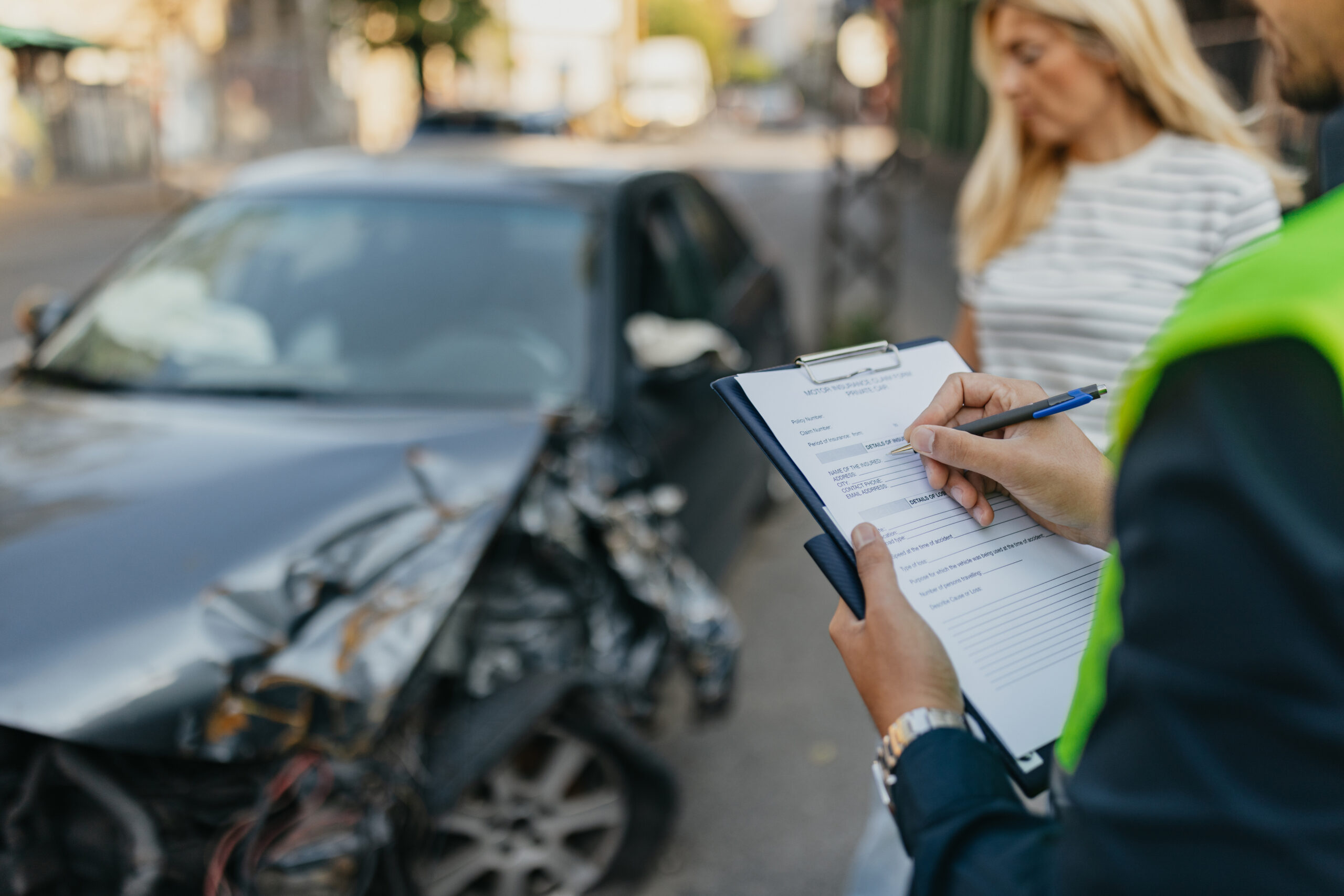
Most drivers in Orange County know they need to call the police after a serious crash. Far fewer know that California law may also require them to file a separate report directly with the Department of Motor Vehicles, regardless of whether law enforcement responded. That report is the SR-1, and missing the filing deadline can carry real consequences for your license and your legal standing after an accident.
What Is the SR-1 Form?
The SR-1 is a California DMV form that a driver—or their insurance agent, broker, or legal representative—must submit after a qualifying collision. It is separate from any police report.
The SR-1, officially called the Report of Traffic Accident Occurring in California, is a document that private individuals submit to the California DMV. It is not the same as a police report or an insurance company’s internal claim form. Law enforcement agencies file their own reports through different channels. The SR-1 is your personal obligation as a driver involved in the accident.
You can download the current SR-1 form directly from the California DMV website at dmv.ca.gov/portal/dmv-virtual-office/accident-reporting.
When Are You Required to File an SR-1?
California law requires an SR-1 filing when a crash results in injury, death, or more than $1,000 in property damage, even if the collision occurred on private property.
Under California Vehicle Code Section 16000, you or your representative must complete an SR-1 and submit it to the DMV within 10 days after an accident if any of the following apply:
- Someone was injured, even if the injury appeared minor.
- Someone was killed
- Property damage from the accident was more than $1,000
This threshold applies when property damage exceeds $1,000. Given repair costs in today’s market, many multi-vehicle collisions result in damage above this threshold.
The 10-day clock starts on the date of the accident, not the date you receive a repair estimate or a medical diagnosis. Do not wait.
Does the Requirement Apply Even If Police Responded?
Yes. A police report does not replace your SR-1 obligation. Both may be required independently under California law.
This is one of the most common misconceptions after a crash. When California Highway Patrol or a local police department responds to an accident and files an official report, many drivers assume their filing obligation ends there. It does not.
California Vehicle Code Section 16000 places the SR-1 filing requirement directly on the driver. A police, CHP, or other law enforcement report does not substitute for the SR-1. The California DMV explicitly states that the SR-1 is required in addition to any report made to the police, CHP, or an insurance company. Law enforcement will not make this report for you, so do not assume that obtaining a police report satisfies your separate DMV reporting obligation.
What Happens If You Do Not File?
Failing to file the SR-1 when required can result in a DMV suspension of your California driver’s license.
California Vehicle Code Section 16004 allows the DMV to suspend your driving privilege if you fail to file the required SR-1 report. That suspension can remain in effect until the report is received by the DMV or other statutory conditions are met. A license suspension creates administrative complications and potential evidentiary issues, though it does not automatically bar a civil claim for damages.
Beyond the administrative consequences, failing to file may create gaps in the documentation of your accident. Insurance companies and courts rely heavily on the paper record that forms immediately after a crash. A missing SR-1 can complicate the administrative record of your collision.
Who Must File, and What Information Does the Form Require?
Any driver involved in a qualifying accident must file, even if they were not at fault. Passengers and pedestrians are generally not required to file under the driver-reporting obligation.
Each driver involved in the accident must submit their own SR-1, though it can be completed on their behalf by an insurance agent, broker, or legal representative. If you were a passenger, a pedestrian, or a cyclist, you are generally not required to file. The form asks for:
- Date, time, and location of the accident
- Names, addresses, and driver’s license numbers of all drivers involved
- Vehicle registration and insurance information for each vehicle
- Details of any injuries, fatalities, or property damage
- Contact information for other involved parties
Accuracy matters here. The information you provide on the SR-1 is submitted to the DMV and may be obtained or referenced in subsequent insurance or legal matters.
SR-1 Filing and Your Insurance Claim
Submitting an SR-1 does not replace your obligation to notify your insurance carrier. Your insurance policy may require prompt notice and cooperation, so review your policy and notify your insurer promptly. File the SR-1 with the DMV and contact your insurer as two separate steps.
If another driver was at fault and you are pursuing a third-party claim, the SR-1may provide contemporaneous information about the crash, though its impact on your claim will depend on its accuracy and the specific circumstances.
How Gibson & Hughes Can Help After an Orange County Accident
Dealing with the aftermath of a crash means managing deadlines, paperwork, insurance adjusters, and potential litigation all at once. Gibson & Hughes represents injury victims throughout Orange County and can help you understand what filings are required, how to protect your claim, and what your legal options are going forward.
If you were hurt in a collision and want to understand your next steps, contact us or call 714-406-0998 to speak with our team.
Last updated: September 2026

